Thursday, January 9, 2014

The One


Quick mental exercise: Imagine you had to describe yourself to someone who has never met you.  How would you do it?  What adjectives would you use?  Would you focus on your outward appearance, your personality, your skills, your career, your hobbies, your political persuasion?  This exercise says a lot about who you are. The way you describe yourself reveals what is most important to your sense of identity.  If that's true of you and me, how much more true is it of the words God  uses to describe Himself? 
All this year, we are studying the nature and character of God. We want to cut through all the man-made notions about God and know Him better than we’ve ever known Him before.  Fortunately, God is not shy about revealing His true character to us.  The Bible is God’s letter to people who don’t know Him (that’s us), so that we can answer the question, “Who is this God who created us, watches over us, and will someday judge us?”  More importantly, God tells us who He is in the Bible so that we can know Him, and by knowing Him, have eternal life.  So that means that the names and adjectives God uses in His Word to describe Himself are incredibly important.  God isn’t like us in using certain words just because they sound cool.  We like to say “awesome” “amazing” and “epic” all the time, even when we’re describing perfectly ordinary things: “That ice cream was awesome.”  “This video game is epic.”  But God doesn’t use words cheaply.  Everything He says about Himself matters.  So how does God describe Himself?
 There is one adjective God uses more than any other when talking about His character.  That is the word holy.  That word, or some variation thereof, is used over 900 times in the Bible.  It is the word most frequently ascribed to God in His Word.  Obviously, the word “holy” is important to God.  But what does that tell us about Him?  God’s holiness is a tough concept for us to wrap our minds around; we can understand His power, His love, His mercy…but what does it mean that God is holy? 


Starting this Sunday, we'll look at God's holiness from a variety of angles.  We'll see what makes Him The One...a God like no other.  This Sunday, I will kick things off with a sermon entitled, "Our God is Not User-Friendly."  I will try to define that word "holy" and what it means for us. 

Thursday, January 2, 2014

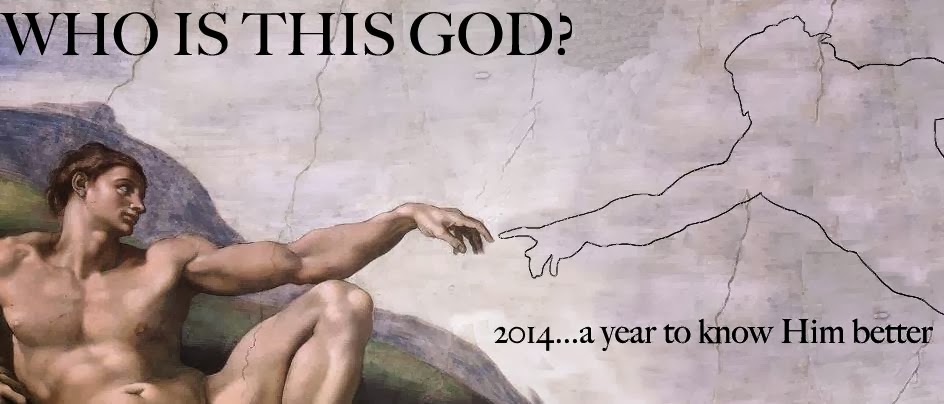
Who is this God?


Several years ago, a hotel night clerk named William Young had an idea for a story that he hoped would teach his kids about God.  He decided to write the story down and give it to them as a Christmas present.  Several friends read the story and encouraged him to publish it.  Eventually, he did self-publish the story.  Somehow—no one ever really knows how these things happen—his story was “discovered” about a year later.  It became a publishing phenomenon, selling over 10 million copies, and was the number one fiction paperback on the NY Times bestseller list for a year and a half.  The name of Young’s book was The Shack.  It is the story of a man who has suffered an unspeakable tragedy, and then unexpectedly meets God face to face.  God in the form of the Father, Son and Holy Spirit spend a weekend with this man, helping him come to terms with what has happened in his life.  I am no publishing expert. I cannot tell you why some books sell and others don’t.  But I strongly believe that the success of The Shack had little to do with William Young’s literary abilities, although he is a fine writer.  It certainly wasn’t because of any strategic decisions on the part of publishing companies.  I think this book, whatever you think of it, exposed a hunger in our hearts to know God personally.  We all have different dreams and goals for our lives.  But almost everyone I know, no matter what their values, beliefs, religious affiliations or lack thereof, wants to know more about God. If they knew they had an opportunity to spend a private moment in the flesh-and-blood presence of the One who created them, knows all about them and controls the universe, they would put that at the very top of their bucket list. 

That’s what we will do this year at Westbury; we’re going to meet God.  We won’t just spend a weekend with Him.  We will spend this year getting to know Him better than we’ve ever known Him before.  The theme of my preaching this year is “Who is this God?”  I’m going to spend a year talking about His attributes, what God is really like.  Along the way, I am going to tackle some tough topics: We’ll talk about God’s wrath and His justice.  We’ll look at the doctrine of the Trinity and we’ll study the book of Revelation.  Yes, as a preacher, I am going where angels fear to tread.  But even if you attend every service, and even if I knock every sermon out of the park, it won’t be enough.  Knowing God isn’t something you can do by listening to a guy talk.  It’s not like a biologist studying a new strain of bacteria or a historian studying Alexander the Great.  You can’t approach it as a merely intellectual exercise.  You have to decide to set aside your own agenda and devote yourself to chasing God.  It’s an experiential process; you have to taste and see that the Lord is good.  So this Sunday, I hope to convince you to do just that.  I'll be starting this year's emphasis with a sermon called "Chasing God" based on Isaiah 55:1-6.
It's a new year, and most of us have made resolutions of some kind.  It's great to attempt to lose weight, to stop smoking, to exercise more, etc.  All of those can change your life in positive ways.  But why not make a resolution today to do something that will change eternity for you and for countless others who come in contact with you?  Why not resolve today to seek after God with all of your heart? 

Here are my planned sermon series for the year:


The One: God’s Holiness (January and February)

The Man Who Changed Everything: The impact of Jesus on the world (February through Easter)

Exclusive: God’s jealousy and our struggle with idolatry.  (Late April through May)

The Love You’ve Been Looking For: 1 John 4 (Late May through mid-June)

Accessible Glory: A study of the Holy Spirit (June through August)

The Long-Awaited Return: The Book of Revelation (August through October)

What is So Amazing About Grace? A study of salvation (October through November)
To Us a Child Is Born: An Advent Series on Isaiah 9:1-7

Thursday, December 19, 2013

Overjoyed


Recently, I was in the car with my mom, and Christmas music was playing on the radio.  The song, “I’ll be Home for Christmas” came on, and my mom said, “I couldn’t listen to this song when your dad was in Vietnam.”  As far as I know, that year he did his tour of duty in Vietnam was the only Christmas my parents have spent apart from one another in nearly a half-century of marriage.  Yet here it is well over forty years later, and when my mom hears that song, it reminds her of one of the saddest times of her life.  For me, it was a needed reminder that while most of us enjoy Christmastime, it’s a tough time of year for many people.  For those folks, some of the songs we love may take on a whole different meaning.  Maybe you can identify with that.  You’ve lost someone recently, or your health is declining, or you’re trying to adjust to a new financial reality, or maybe you don’t even know why you’re sad…you just are.  If this just doesn’t feel like “The Most Wonderful Time of the Year,” I hope my message this Sunday will be exactly what you need.  But even if you consider yourself relatively happy, this sermon is for you.  One thing I have observed is that for the overwhelming majority of happy people, happiness is extremely fragile. You can easily identify one or at most two things in their lives which, if those things were suddenly missing, their happiness would vanish.  So maybe you’ve just fallen in love, and that’s an amazing feeling.  But someday, that person may be gone, or they may not love you back.  Or maybe you just got hired to your dream job; but what if that job turns out to be a nightmare instead?  CS Lewis said “Never let your happiness depend on something you may lose.”  And unfortunately, almost all the stuff that makes us happy is temporary.  We will lose it eventually.  So Merry Christmas!    
We’ve been talking the past several weeks about “How to Be Good at Life,” as we’ve studied the wisdom of Scripture on how to live a life that is an example to others.  All year, we’ve been talking about representing Christ in a non-Christian culture.  As I tie up both of those threads this Sunday, I can tell you this: Nothing in all the world is as attractive as joy.  Nothing draws people to Christ more reliably, no sermon in the world preaches as powerfully, as an ordinary person who has joy.  And besides that, living with joy is, well, enjoyable.  It is the only way to live.  I have good news for you today: God wants you to have joy.  So this Sunday, we’re going to talk about joy;  The joy the wise men expressed when they found the infant Messiah.  We’ll talk about what it is, and how we can have it.

Thursday, December 5, 2013

Inner Transformation


How would you change yourself if you had the chance?  You may be aware that there are computer programs that now exist than enable you to custom design a house on your computer monitor.  You can scan in a picture of your house, and then play with it all you want.  See what it would look like if you added on. Try a new color scheme.  Change the landscaping.  Go from a tin roof to shingles, or from wood to siding.  Then when you find a combination you like, just give it to your builder and say, “That’s what I want.”  Wouldn’t it be great if we could do that with our selves?  What would you change?  I daresay most of us would change at least a few things about our appearance.  We would add a few inches of height, put hair back on that head, or shave off a few pounds.  Others would be more practical.  They would focus on inner qualities and skills that last longer and have more impact on our lives.  Some might say, “I want to fill my mind with knowledge of finances and markets, so I can invest my money wisely and make millions.”  Others would order an intelligent witty personality, so that they could always have plenty of friends, and always be the life of the party.  Others might choose the ability to become a scratch golfer, a cello virtuoso, or a scientific genius, so that they could earn a living doing something they love.  It’s a very appealing idea, isn’t it?  Everyone alive has an image of their ideal self; the person they most want to be.
 
But who does God want you to be?  That is the key question.  According to Proverbs 16:32, a person’s highest goal should be to rule their spirit.  The NIV says, “self-control,” but the actual Hebrew term is “rule your spirit.”  In other words, being able to control your inner self, your emotions, motives, personality, is far greater than any other earthly achievement.  A man or woman whose personality is truly godly is a true hero, far surpassing the military conqueror who wins a battle.  While we all desire beauty, strength and skill, God wants us to seek inner righteousness.  Solomon knew this.  In Proverbs, he often talks about the qualities that must be found in a godly personality.  As I read the book of Proverbs, there are three qualities that keep hitting me right in the face.  I suspect you’ll find that, like me, each of these three are qualities you need a lot more of in your life.  This Sunday, we'll examine these three qualities that we should seek to program into our lives.  The good news is that this kind of transformation IS possible. In fact, it's the full-time occupation of God. 

Thursday, November 21, 2013

What Owns You?


My dad was a Master Sergeant in the army in Vietnam in the late ‘60s.  He was stationed on a base, and one of his jobs was to process soldiers coming in from America and going home from Vietnam.  He also processed guys who were going on R&R.  This was tricky; the guys going on R&R would usually bring all the money they had, so my dad and the other personnel at the base had to be very careful about theft.  They told every one of these soldiers to put their belongings in the safe.  One guy didn’t trust them.  He put all his money in a suitcase and chained it to his bed.  The next day, my dad was called to investigate a theft.  They found this guy in his underwear.  Someone had snuck in while he slept and cut the suitcase at the handle.  Everything he owned was gone.  All he had left was his underwear and the handle of that suitcase.

It’s been said that money makes the world go ‘round…but money ends up making a fool out of most of us eventually.  Some of us, like that guy on my dad’s army base, don’t listen to good advice; others are too naïve and trusting.  Some of us are too conservative; others are too carefree.  Even if we haven’t lost it all, been audited by the IRS, had to file bankruptcy or in some other way failed financially—even if you’ve never been made a fool of by money, I guarantee you know someone who has.  We all have our stories.  We’re in a series now called “Being Good at Life,” focused on the wisdom we find in the biblical book of Proverbs.  If you’ve never read Proverbs, you might be surprised to find out it has an awful lot to say about money.  Some of the stuff it says is basic common sense; when you read it, you nod your head and say, “Ain’t that the truth?”  Other stuff it says just sounds exactly opposite what we would expect.  It’s counter-intuitive.  This Sunday, I won’t be able to cover everything Proverbs has to say about money, but I want to mention seven key teachings very briefly.  As we study this together, my prayer is that many of us who find ourselves slaves to the ruthless taskmaster that is money and possessions will take the first step toward freedom. 

Thursday, November 14, 2013

Weapon safety


My ten-year-old son has a BB gun.  I bought it for him because I knew how much fun I had with mine when I was a kid.  There's another reason why I bought it for him.  When I was around ten, my dad bought me a 20 gage shotgun.  I was a little kid; the first time I fired the gun, the recoil knocked me down.  My dad ended up sawing a couple inches off the stock so that I could brace it against my shoulder.  You may wonder what kind of father would buy such a dangerous weapon for such a small child.  First of all, we lived in the country.  Being able to handle a gun was not only a rite of passage, it was a necessity.  Second of all, my dad used that gun to teach me responsibility.  There were very strict rules.  You don’t load your gun and cock it until you are ready to fire.  You never leave your gun loaded.  You never aim at anything unless you know what it is.  And you never, ever point the gun at anyone.  Dad showed me the proper way to hold the gun when I walked, so that if I tripped, I wouldn’t accidentally discharge it.  Once, my brother and I went hunting. When we got back, I left my gun laying out in the utility room.  When my dad found my gun laying out, still loaded, I was in serious trouble.  A gun is nothing to mess around with. 
 
Proverbs 18:21 tells us that our words are like a gun.  They have the power of life and death.  We can use words to bring hope, joy, encouragement, comfort, and any number of wonderful things.  There are people in this very room who have said encouraging things to me that I will cherish forever.  We can also use words to praise the name of our God.  And of course, the greatest use of words is when we share the gospel with someone.  But words can be a weapon, too.  Like a gun in the hands of an irresponsible person, words used carelessly can destroy so much.  Everyone here has been hurt by words in the past.  No matter who you are or what you are capable of in any other part of your life, you have the power to kill or heal, to build up or destroy, right behind your teeth.  It is an awesome responsibility that we all share to use our words carefully.  So how do we make sure that our words are a force for good instead of evil?  Not surprisingly, the book of Proverbs has much to say on this subject.  This Sunday, I'll continue my series from Proverbs, called "Being Good at Life," with a look at how God wants us to use our words. 

Thursday, November 7, 2013

Being Good at Life


             The famous preacher and author Chuck Swindoll was in the Marines as a young man.  On one occasion, he was on board a ship that was cruising into the harbor of Taipei, Taiwan.  When they got within less than a mile of the port, the ship suddenly stopped.  They waited as a man in a small boat came out to meet them.  This man was the harbor pilot.  He climbed on board, took the wheel, and guided the boat the rest of the way.  Some of the Marines thought this was a silly formality; after all, why couldn’t their own captain take the boat into port, since he had brought them this far?  But then they noticed that the harbor pilot was steering the boat in an odd course, weaving back and forth through the harbor on the way to the shore.  They looked over the side of the boat, and down deep under the water, they saw the reason why.  There were mines in that harbor, below the surface of the water.  Anyone who tried to sail into Taipei harbor would surely be blown to bits—unless the harbor pilot was at the wheel.  Only he knew where the mines were.
            You and I live in Taipei harbor.  In every step we take, every decision we make, there are potential mines waiting to blow us out of the water.  That attractive, vibrant person you work with, who you find yourself daydreaming about at random moments of the day--six months from now, you may find yourself in a relationship with that person that has destroyed your family and made your life a living hell.  This week, a friend may convince you to sink money you don’t really have into an investment that’s "a can't-miss opportunity"; two years later, you’ll be declaring bankruptcy.  This very afternoon, you might lose your temper because of some jerk on the freeway and end up doing something you’ll regret the rest of your life.  Face it, sooner or later, nearly all of us manage to make a mess out of our lives.  No matter how smart we may think we are, or who we may consult, we can’t see the mines in the harbor.  Unless we give the wheel to the harbor pilot.  There is only one right way, and only He knows it.
            All this year, I have been preaching on the topic of "representing Christ in a non-Christian culture."  We've looked at various attributes we need in order to live out our faith in these challenging times: Boldness, faith, prayer, holiness, etc.  For this last series of the year, I want to talk about one more important attribute: Wisdom.  We often confuse wisdom with knowledge, but the two are very different.  Knowledge is assimilating information; Wisdom is (my definition) being good at life.  Imagine if Christians were universally known for being dependable, smart, capable, rock-solid individuals who others sought to learn from.  That is what we were meant to be.  No, we won't all be successful in the estimation of this world, but we should all be men and women of wisdom.  What does that look like in real life?  Over the next several weeks, leading up to Christmastime, we'll take a look at the book of Proverbs, and see what it really means to be good at life.